
South American orchards present unique challenges that demand specialized equipment. With diverse terrain ranging from the steep slopes of Chile’s fruit regions to the dense plantations of Brazil, orchard owners require tractors that can navigate narrow rows while delivering reliable performance. This guide explores the world of compact and narrow orchard tractors specifically designed for South American agricultural conditions.
As fruit production continues to expand across the continent, the need for machinery that maximizes efficiency without damaging valuable crops has become increasingly important. The right orchard tractor can significantly impact productivity, harvest quality, and ultimately, your bottom line.
Unique Agricultural Needs of South American Orchards
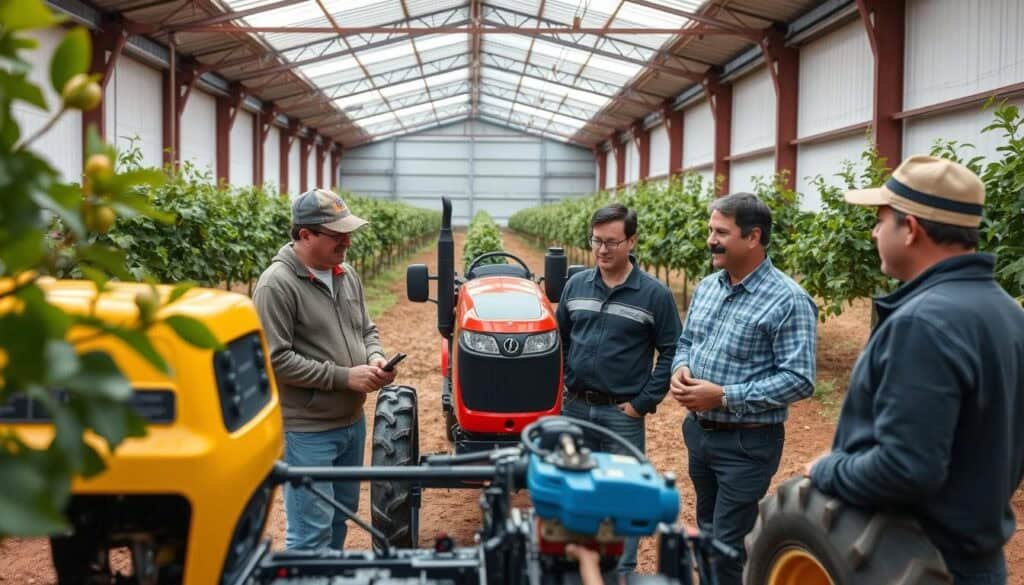
Narrow spacing in South American apple orchards requires specialized compact tractors
South American orchard layouts differ significantly from those in North America and Europe. With land often at a premium, trees are frequently planted in high-density arrangements with row spacing as narrow as 2-3 meters. This creates unique challenges for machinery operation.
The continent’s diverse microclimates support a wide variety of fruit production, from citrus in Brazil and Argentina to stone fruits in Chile and berries in Colombia. Each crop type demands specific equipment considerations.
Key South American Orchard Challenges:
- Row widths averaging 2-3 meters (compared to 4-5 meters in North American orchards)
- Varied terrain including steep hillsides in Andean regions
- Year-round operations requiring versatile equipment
- Limited infrastructure for large machinery in remote areas
- Need for fuel efficiency due to higher fuel costs in many regions
These unique conditions make standard agricultural tractors unsuitable for many South American orchard operations. Specialized compact and narrow tractors have become essential tools for efficient orchard management across the continent.
Finding equipment that can navigate these tight spaces while providing sufficient power for necessary tasks is a common challenge for orchard owners. Learn more about how specialized orchard tractors can address these unique challenges.
Key Features of Compact and Narrow Orchard Tractors

Effective orchard tractors for South American markets combine compact dimensions with robust performance features. The following specifications are particularly important when selecting equipment for these specialized applications:
Dimensional Considerations
- Overall Width: Typically 1.0-1.5 meters, allowing passage between closely planted trees
- Low Profile Design: Height under 2 meters to navigate under branches
- Compact Wheelbase: Usually 1.5-1.8 meters for tight turning radius
- Ground Clearance: Sufficient for uneven terrain while maintaining stability
Performance Requirements
- Power Output: 30-90 HP depending on orchard size and applications
- Fuel Efficiency: Low consumption engines suitable for extended operation
- Transmission: Hydrostatic or shuttle shift for precise speed control
- Hydraulic Capacity: Multiple outlets for powering specialized attachments
Specialized Orchard Features
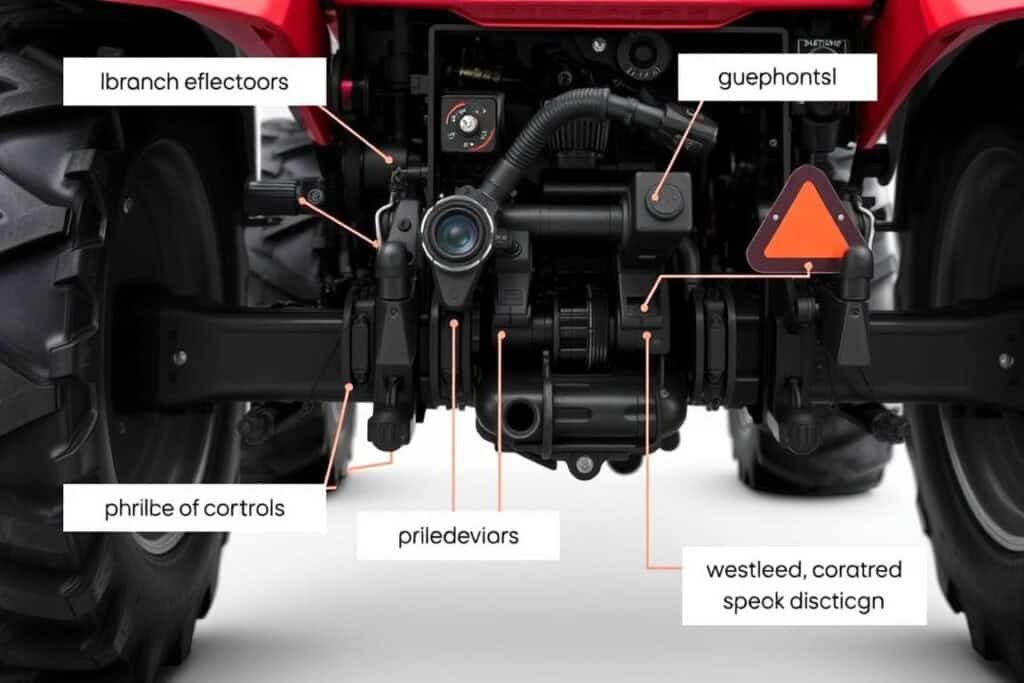
- Protective Shielding: Smooth underbody and side panels to prevent snagging on branches
- Specialized Cooling: Protected radiators and air intakes to prevent debris accumulation
- Branch Deflectors: Angled frames to push branches away without damage
- Protected Controls: Shielded operator stations to prevent branch interference
- Reduced Turning Radius: Articulated steering or specialized front axles
- Attachment Compatibility: Quick-connect systems for orchard-specific implements
- Stability Systems: Low center of gravity and wide wheel stance for hillside operation
- Fruit Protection: Smooth surfaces and protected exhaust to prevent crop damage
Need Help Finding the Right Orchard Tractor?
Our equipment specialists can help you identify the perfect compact tractor for your specific orchard layout and requirements.
Leading Manufacturers of Narrow Orchard Tractors for South America
Several manufacturers have developed specialized compact and narrow orchard tractors that address the unique requirements of South American fruit production. These companies have established strong distribution and service networks throughout the continent.

New Holland Specialty
New Holland’s T4F and TK4 series have gained significant popularity in South American orchards, particularly in Argentina and Chile. These narrow tractors offer widths starting at just 1.3 meters.
- Power Range: 65-106 HP
- Key Models: T4.80F, T4.100F, TK4.80
- Special Features: SuperSteer™ front axle for tight turning, specialized fruit-safe exhaust systems
- Service Network: Extensive dealer presence in major fruit-producing regions
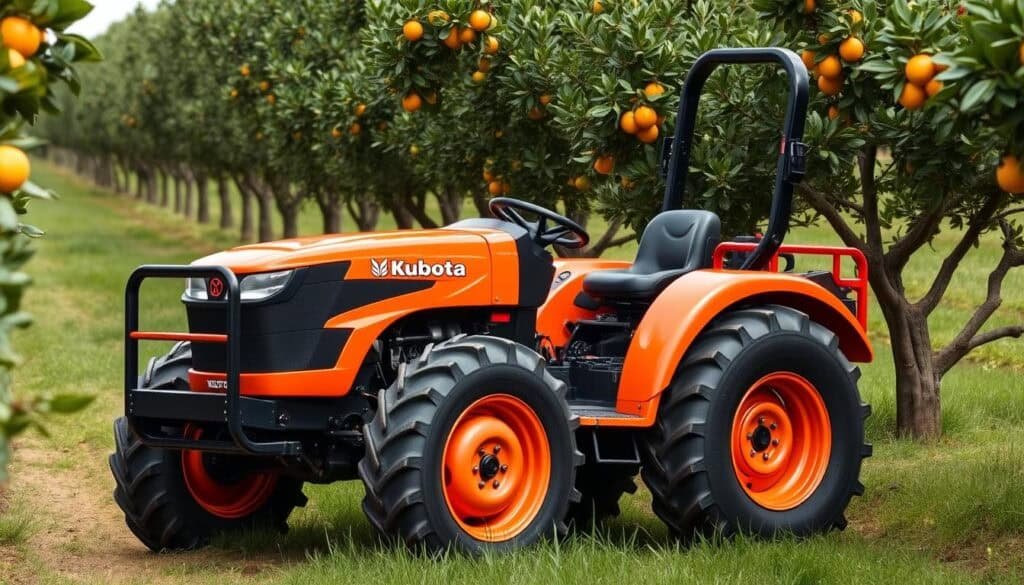
Kubota Narrow Series
Kubota’s M5N and M4N series have been specifically adapted for South American conditions, with models gaining popularity in Brazil and Colombia’s fruit sectors.
- Power Range: 50-105 HP
- Key Models: M5091N, M4072N
- Special Features: Bi-Speed turn system, ultra-narrow configurations available
- Service Network: Growing dealer network with specialized orchard equipment training
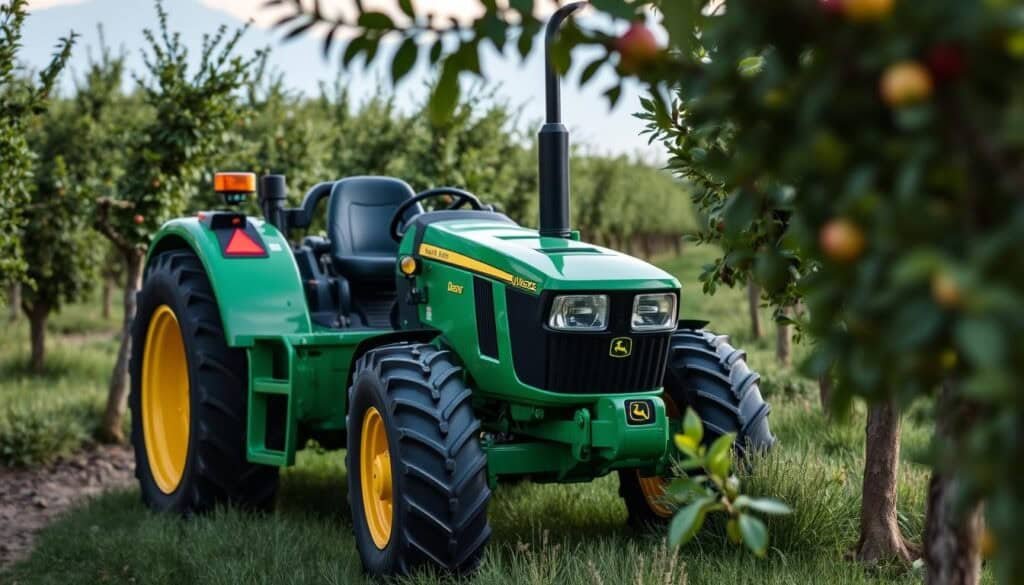
John Deere Specialty
John Deere’s 5GN and 5EN series have been adapted for South American orchard conditions, with strong presence in Chile and Peru’s high-value fruit sectors.
- Power Range: 75-100 HP
- Key Models: 5075GN, 5090EN
- Special Features: Electrohydraulic engagement, specialized PowrReverser™ transmission
- Service Network: Comprehensive dealer support with specialized technicians
Emerging Manufacturers in the South American Market
In addition to established global brands, several manufacturers are developing specialized orchard tractors specifically for South American conditions:
| Manufacturer | Country of Origin | Key Models | Unique Features | Target Markets |
| Valtra | Finland/Brazil | A750F, A950F | Locally manufactured in Brazil, specialized for tropical conditions | Brazil, Colombia, Ecuador |
| Landini | Italy | Rex 4 Series | Ultra-narrow configurations (1.0m), specialized hydraulics | Argentina, Chile, Uruguay |
| Antonio Carraro | Italy | TGF Series | Articulated chassis, reversible driving position | Chile, Peru, Colombia |
| LS Tractor | South Korea | XR Series | Affordable price point, simplified maintenance | Brazil, Paraguay, Bolivia |
Regional Variations Across South America

Tractor requirements vary significantly across South American countries due to differences in terrain, crop types, and farming practices. Understanding these regional variations is essential when selecting the appropriate compact and narrow orchard tractor.
Brazil
As South America’s largest agricultural producer, Brazil has diverse orchard operations ranging from vast citrus plantations to smaller specialty fruit farms.
- Primary Crops: Citrus, mango, papaya
- Tractor Requirements: Heat-resistant cooling systems, tropical-rated electronics
- Popular Models: Valtra A950F, New Holland T4.85F
- Unique Challenges: High humidity, tropical conditions, varied terrain
Chile
Chile’s Mediterranean climate supports extensive deciduous fruit production, with orchards often located on hillsides requiring specialized equipment.
- Primary Crops: Apples, stone fruits, wine grapes
- Tractor Requirements: Hillside stability, precision hydraulics
- Popular Models: John Deere 5075GN, Landini Rex 4-100
- Unique Challenges: Steep terrain, premium fruit requiring careful handling
Argentina
Argentina’s diverse climate zones support various orchard types, from northern citrus to southern apples and pears.
- Primary Crops: Citrus, apples, pears, olives
- Tractor Requirements: Versatility for varied applications, fuel efficiency
- Popular Models: New Holland T4.110F, Kubota M5091N
- Unique Challenges: Wide temperature variations, diverse crop requirements
Colombia
Colombia’s tropical highlands support specialty fruit production requiring compact equipment for small, terraced orchards.
- Primary Crops: Avocados, citrus, tree tomatoes
- Tractor Requirements: Extreme maneuverability, compact size
- Popular Models: Antonio Carraro TGF, Kubota M4072N
- Unique Challenges: Small farm sizes, terraced layouts, high altitude
Peru
Peru’s export-oriented fruit industry requires specialized equipment for high-density plantings in coastal and highland regions.
- Primary Crops: Avocados, blueberries, citrus
- Tractor Requirements: Precision hydraulics, compact dimensions
- Popular Models: John Deere 5090EN, Landini Rex 4-120
- Unique Challenges: High-density plantings, export quality requirements
Uruguay
Uruguay’s growing fruit sector focuses on citrus and deciduous fruits with modern orchard layouts requiring specialized equipment.
- Primary Crops: Citrus, apples, stone fruits
- Tractor Requirements: Versatility, fuel efficiency
- Popular Models: Valtra A750F, New Holland T4.75F
- Unique Challenges: Smaller market with limited dealer networks
“Understanding regional variations is critical when selecting orchard tractors for South American markets. A model that performs excellently in Chile’s apple orchards may be completely unsuitable for Colombia’s avocado farms due to differences in terrain, row spacing, and operational requirements.”
Economic Considerations and ROI
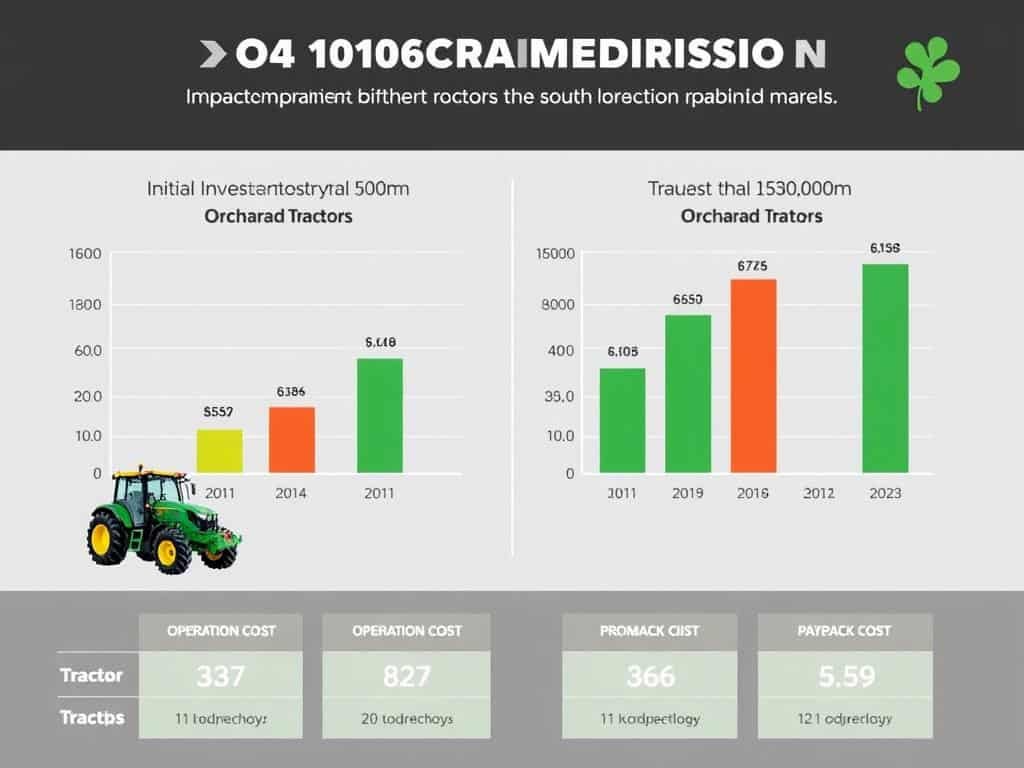
Investing in specialized compact and narrow orchard tractors represents a significant capital expenditure for South American fruit producers. Understanding the economic considerations and potential return on investment is crucial for making informed purchasing decisions.
Initial Investment Factors
- Base Equipment Cost: Specialized orchard tractors typically command a 15-30% premium over standard agricultural models
- Essential Attachments: Specialized implements for orchard work can add 20-40% to the base cost
- Import Duties: Vary significantly by country, ranging from 0-35% depending on origin and trade agreements
- Financing Options: Agricultural development banks in many South American countries offer specialized equipment loans
- Subsidies: Some countries provide incentives for modernizing agricultural equipment
- Used Equipment Market: Limited availability of specialized orchard models compared to standard tractors
Operational Cost Considerations
- Fuel Efficiency: Modern narrow tractors typically consume 4-7 liters/hour depending on operations
- Maintenance Requirements: Specialized components may increase maintenance costs by 10-15%
- Service Intervals: Typically 250-500 hours depending on manufacturer and conditions
- Parts Availability: Critical factor in remote regions where downtime can be costly
- Operator Training: Specialized skills required for efficient operation and maintenance
- Resale Value: Specialized orchard tractors typically retain 50-60% of value after 5 years
Productivity Benefits and ROI
The right compact and narrow orchard tractor can deliver significant productivity improvements that offset the higher initial investment:
| Benefit Category | Typical Improvement | Economic Impact |
| Operational Efficiency | 20-30% reduction in operation time | Lower labor costs, more timely operations |
| Crop Protection | 10-15% reduction in fruit damage | Higher marketable yield, better quality classification |
| Precision Application | 15-25% reduction in input use | Lower fertilizer and chemical costs |
| Versatility | Multiple operations with single machine | Reduced need for specialized equipment |
Calculate Your Potential ROI
Our equipment specialists can help you analyze the potential return on investment for different orchard tractor models based on your specific operation.
Maintenance Requirements and Service Support
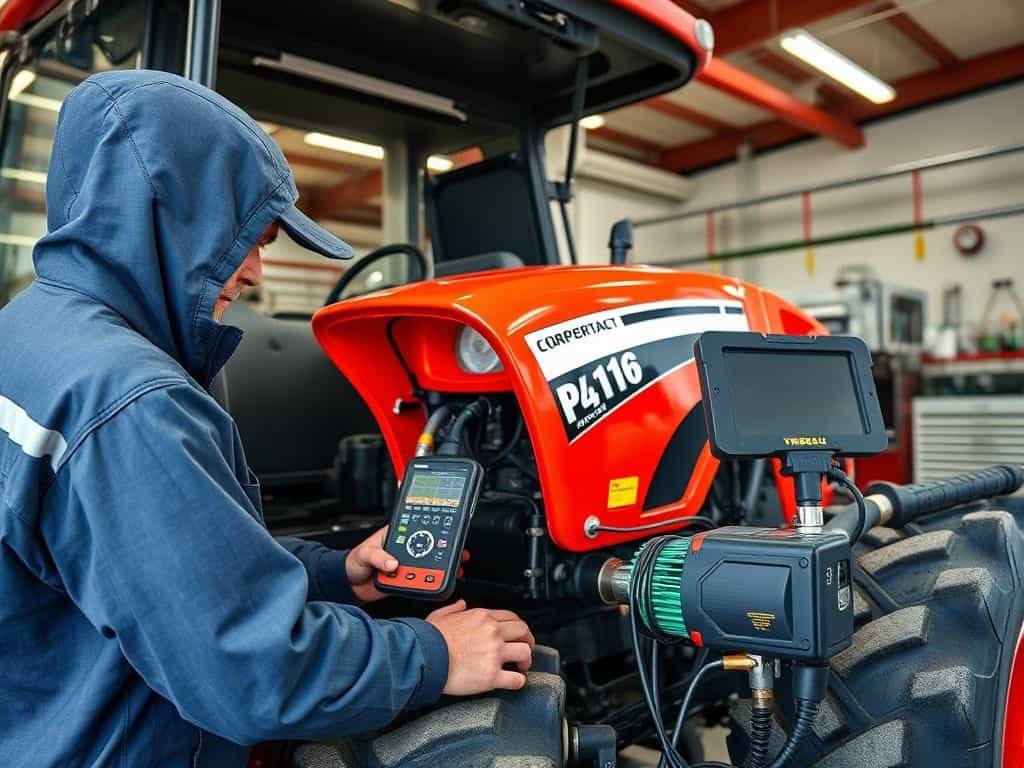
Proper maintenance is critical for maximizing the lifespan and performance of compact and narrow orchard tractors in South American conditions. The availability of service support varies significantly across the region and should be a key consideration when selecting equipment.
Common Maintenance Requirements
- Daily Inspections: Fluid levels, air filters (especially important in dusty orchard conditions)
- Regular Service: Oil changes every 250-300 hours, transmission fluid every 500-1000 hours
- Specialized Attention: Cooling systems require frequent cleaning due to orchard debris
- Seasonal Preparation: Pre-harvest inspections and maintenance to prevent critical downtime
Service Network Considerations
- Dealer Distribution: Varies widely by brand and country
- Parts Availability: Critical for minimizing downtime during harvest seasons
- Technical Expertise: Specialized knowledge required for orchard-specific systems
- Mobile Service: Increasingly important in remote orchard regions
Service Support by Manufacturer
Maintenance Tip: In South American orchard conditions, air filtration systems require more frequent attention than manufacturer recommendations due to high dust levels during dry seasons. Establishing a twice-weekly inspection routine can prevent costly engine damage.
Strategies for Optimizing Maintenance in Remote Areas
- Parts Inventory: Maintain critical spare parts on-site
- Staff Training: Invest in basic maintenance training for operators
- Service Contracts: Consider extended warranty and service agreements
- Preventive Maintenance: Develop comprehensive schedules based on local conditions
- Digital Diagnostics: Utilize remote monitoring where available
- Cooperative Arrangements: Share specialized tools with neighboring operations
Future Trends in Orchard Tractor Design for South America

The market for compact and narrow orchard tractors in South America is evolving rapidly, with several emerging trends that will shape the next generation of equipment. These innovations address the specific challenges of South American orchard operations while incorporating global technological advances.
Electrification
Battery-electric and hybrid orchard tractors are beginning to enter the South American market, offering significant advantages for orchard operations:
- Zero emissions during operation
- Reduced noise levels (important for agritourism operations)
- Lower operational costs in regions with high fuel prices
- Simplified maintenance requirements
- Challenges remain with battery life and charging infrastructure
Automation & Precision
Advanced guidance and automation systems are being adapted for narrow orchard environments:
- GPS-guided operation for precise row navigation
- Automated implement control for consistent application
- Sensor-based tree monitoring systems
- Remote operation capabilities for labor-intensive tasks
- Integration with orchard management software
Adaptable Configurations
Next-generation tractors feature modular designs to address the diverse requirements across South American orchards:
- Adjustable track widths for different row spacings
- Interchangeable wheel configurations
- Height-adjustable operator platforms
- Reversible driving positions
- Quick-change implement systems
Regional Innovation Hubs
Several South American countries are developing specialized agricultural technology centers focused on orchard mechanization:
- Brazil: EMBRAPA’s mechanization division is developing specialized equipment for tropical fruit production
- Chile: The Fruit Technology Consortium is working on precision systems for high-value export crops
- Argentina: INTA’s agricultural engineering program focuses on adaptations for diverse orchard environments
- Colombia: The National Coffee Research Center is pioneering narrow equipment for mountainous terrain
- Peru: The Innovation in Agriculture Program is developing water-efficient orchard systems
- Regional Collaboration: Cross-border initiatives are addressing shared challenges
“The future of orchard tractors in South America will be defined by equipment that combines extreme versatility with technological sophistication. The most successful designs will be those that can adapt to the region’s diverse conditions while remaining serviceable in remote areas.”
Stay Ahead of Industry Trends
Download our comprehensive guide to emerging technologies in orchard tractors for South American markets.
Conclusion: Selecting the Right Compact Orchard Tractor
Choosing the optimal compact and narrow orchard tractor for South American operations requires careful consideration of multiple factors. The unique agricultural conditions across the continent demand specialized equipment that balances maneuverability, power, and durability.
As we’ve explored, the key considerations include dimensional specifications, performance capabilities, regional variations, economic factors, and service support availability. The ideal tractor will address your specific orchard layout, crop type, and operational requirements while providing reliable performance in challenging conditions.
With continued innovation in the sector, South American orchard owners have an expanding range of options for specialized equipment. By focusing on the specific needs of your operation and understanding the trade-offs between different models, you can make an informed investment that enhances productivity and profitability for years to come.
Ready to Find Your Ideal Orchard Tractor?
Our team of specialists can help you navigate the options and identify the perfect compact and narrow orchard tractor for your South American operation.
Frequently Asked Questions
What is the minimum width for an orchard tractor in high-density South American plantings?
For the narrowest high-density plantings in South America, particularly in avocado and citrus orchards, tractors with widths of 1.0-1.2 meters are recommended. Ultra-narrow models from manufacturers like Antonio Carraro and Landini can achieve widths as low as 1.0 meter, while still providing sufficient power and stability for essential orchard tasks.
How do maintenance requirements differ for orchard tractors in tropical versus temperate South American regions?
In tropical regions like northern Brazil and Colombia, cooling systems require more frequent maintenance due to higher temperatures and humidity. Air filtration systems also need more attention in dusty conditions. In temperate regions like Chile and southern Argentina, freeze protection and seasonal preparation become more important. Manufacturers typically offer region-specific maintenance schedules that account for these differences.
What financing options are available for orchard tractors in South American markets?
Several financing options exist for South American orchard owners. Many countries have agricultural development banks offering specialized equipment loans with favorable terms. Manufacturer financing is available through major brands like John Deere and New Holland. Additionally, export credit agencies from tractor manufacturing countries often provide financing support. Regional agricultural cooperatives sometimes offer group purchasing programs that can reduce costs.
How do hillside orchards in Andean regions affect tractor requirements?
Hillside orchards in Andean regions require tractors with enhanced stability features, including lower centers of gravity, wider wheel stances, and specialized braking systems. Models with articulated steering often perform better on slopes than rigid-frame tractors. Additional considerations include higher power-to-weight ratios for climbing ability and specialized hillside attachments. Some manufacturers offer specific hillside packages for their orchard tractor models.