
Farm Tractor Solutions for Modern Agriculture Development
A well-matched farm tractor delivers measurable ROI by reducing labor, shortening field cycles, and lowering operating costs—making it a strategic asset for modern farms and distributors. As global farms push for higher efficiency, tractors that combine dependable performance, compatible implements, and robust after-sales support are increasingly essential to sustained productivity.
This article reviews the evolving role of tractors across farm tasks, the technology trends improving performance and equipment life, and the supplier capabilities buyers should evaluate for international procurement.
Evolving Role of Farm Tractors in Agriculture
Farms today are increasingly mechanized with a growing adoption of data-driven tools. A modern tractor does far more than plow: it supports year‑round field management from seedbed prep to harvest logistics. For small and mid‑size operations, the right tractor — matched to power, PTO/hydraulic capacity, and implements — can cut labor costs, speed turnaround, and better meet seasonal utility needs (for example, a narrow orchard tractor vs. a higher‑HP unit for broadacre tillage).
Key Functions and Application Scenarios
Tractors are used across a wide range of farm tasks and equipment pairings, delivering flexible utility where needed:
• Soil preparation — plowing, rotary tilling, and harrowing (rotary tillers and moldboard plows for seedbed prep).
• Crop maintenance — boom sprayers, inter‑row cultivators, and mechanical weeding to protect yields.
• Orchard and vineyard work — narrow, low‑profile specialty tractors for steep or confined rows.
• Transport — moving trailers, feed, and materials across fields and farm yards with suitable hitching and brakes.
• Power supply — PTO‑driven implements like mowers, balers, and seeders, plus hydraulic‑powered loaders and attachments.
• Infrastructure and grounds — landscaping, ditching, and cleaning tasks using rear or mid‑mount implements.
• Livestock support — feed handling, manure spreaders, and bale transport to streamline animal operations.
• Implement compatibility — choose tractors with the correct PTO speed, hydraulic flow, and hitch class to cover your implement range and extend machine versatility.
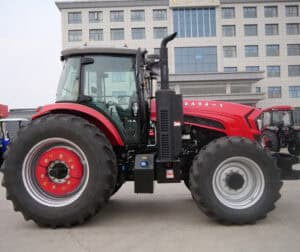
Technology Advancements Driving Performance
Modern tractors now combine targeted mechanical and electronic improvements that increase field efficiency, reduce fuel use, and lower total cost of ownership for equipment owners.
Efficient Powertrains
High‑torque diesel and hybrid powertrains deliver stronger pull and better torque curves at low RPM, improving fuel economy under heavy soil loads and in hilly terrain; check PTO rating and engine torque curves when matching power to implements.
Transmission Evolution
From synchronized gearboxes and shuttle shift to CVT, transmission choices affect operator fatigue and field throughput — many series tractors offer advanced transmissions on higher trims to improve shift smoothness and overall productivity.
Enhanced Maneuverability
Compact chassis, improved steering geometry, and tight turning radii give specialty and utility tractors precise control in orchards, greenhouses, and narrow lanes, reducing crop damage and improving pass-to-pass accuracy.
More Intelligent Controls
Telematics, GPS autoguidance, digital dashboards, and smart hydraulic management enable precision tasks, remote diagnostics, and better implement control — features increasingly available across model series for tighter workflow integration.
Durability and Total Cost of Ownership
Robust steel frames, corrosion-resistant coatings, and longer‑life consumables reduce downtime and service costs; when evaluating suppliers, compare warranty terms, mean time between failures, and parts availability for long‑term value.
Export Market Development and Procurement Considerations
As agricultural modernization spreads, demand for farm tractors is growing in regions such as South America, Southeast Asia, Eastern Europe, and Africa. When distributors and importers evaluate suppliers, practical procurement requirements matter more than marketing claims:
• Stable supply chain — proven international shipping experience and predictable lead times to meet seasonal needs.
• Certifications and compliance — appropriate local approvals (CE for Europe, EPA/Tier for North America, plus any regional safety or emissions standards) to avoid customs delays.
• Right model range — multi‑model lines (e.g., 25–240 HP where applicable) and series tractors that cover small orchards to large mixed farms so buyers can match capacity to needs.
• Spare parts and service network — on‑the‑ground parts availability and repair capability to reduce downtime and protect ROI for equipment owners.
• Customization options — implement and orchard-specific configurations to fit local crops, row spacing, and terrain.
• Competitive pricing and clear total cost of ownership — transparent quotes that include shipping, duty, spare parts, and training to help distributors evaluate customer ROI.
Buyers should also request supplier KPIs (average delivery time, warranty terms, MOQ) and a procurement checklist or sample training package before committing to large orders.
Why Supplier Capability Matters
For B2B buyers, a tractor is a multi-year capital purchase that directly impacts farm margins; supplier capability therefore affects uptime, service costs, and resale value. When evaluating vendors, ask for concrete evidence rather than general assurances:
• Manufacturing and QA — factory acceptance test reports, production quality certificates, and batch inspection results before shipment.
• Documentation and compliance — complete export/import paperwork, serial‑numbered parts lists, and user manuals required for registration and local inspections.
• After‑sales support and training — documented SLAs for technical support, scheduled maintenance training, and remote troubleshooting resources.
• Product improvement loop — examples of regional modifications and version updates based on customer feedback to ensure models remain fit for local conditions.
Practical checklist: request sample warranty terms, average spare‑parts lead time, and a supplier audit template. This is especially important when buying specialty tractors or utility models that must operate daily in harsh, dusty, or steep environments.
Future Trends in Farm Tractor Development
Looking ahead, series tractors and specialty models will increasingly adopt smarter, cleaner, and more connected technologies that map to specific farm needs.
• Sensor integration and precision positioning — GNSS guidance and machine‑control sensors enable automated steering and low‑speed autonomous seeding in orchards and reduced-overlap spraying.
• Electrification and hybrid power — electric or hybrid utility tractors suit short‑range, low‑speed tasks (loader work, greenhouse operations) while high‑HP series tractors will likely remain diesel‑dominant for heavy tillage.
• Remote diagnostics and telematics — cloud telemetry shortens service response time by enabling fault alerts, parts prediction, and guided maintenance workflows.
• Operator comfort and safety — ergonomic cabins, vibration reduction, and improved controls reduce fatigue and raise productivity on long shifts.
• Localized design — specialty tractors tailored for specific crops, row spacing, and terrain improve fit‑for‑purpose performance and lower total ownership cost.
In markets facing labor shortages, these automation and telematics advances will be especially valuable for maintaining output with smaller crews.
Conclusion
Farm tractors remain essential power units for modern agriculture; selecting the right tractor, matching implements correctly, and partnering with a dependable manufacturer helps farms sustain productivity and adapt to future challenges. For procurement support or a spec checklist, contact our team to discuss models and long‑term service plans.
FAQ
What horsepower range is suitable for small and medium farms
As a guideline, 30–100 HP covers many orchard, vegetable, and mixed‑farm operations; farms focused on deep tillage or wide‑acreage fieldwork typically choose 120 HP and up. Contact a supplier with your acreage and implements to confirm the right match for your needs.
Which implements can farm tractors work with
Tractors work with a broad set of implements — loaders, plows, rotary tillers, seeders, sprayers, mowers, balers, and trailers — connected via PTO shafts or hydraulic circuits. Verify PTO speed, hydraulic flow, and hitch class when pairing equipment.
How long can a tractor typically operate each day
A well‑maintained tractor often runs 8–12 hours daily during peak seasons; actual endurance depends on engine load, cooling, scheduled maintenance, and ambient conditions.
What certifications are important for exporting tractors
Common requirements include CE for the European market and EPA/Tier emissions standards for North America; also check ISO quality certifications and any regional safety or emissions rules in your destination country.
How important is after-sales support
After‑sales support is critical: timely spare parts, trained service networks, and remote diagnostics reduce downtime and protect equipment ROI. Ask suppliers for service SLAs, spare‑parts lead times, and available training packages.